The workload
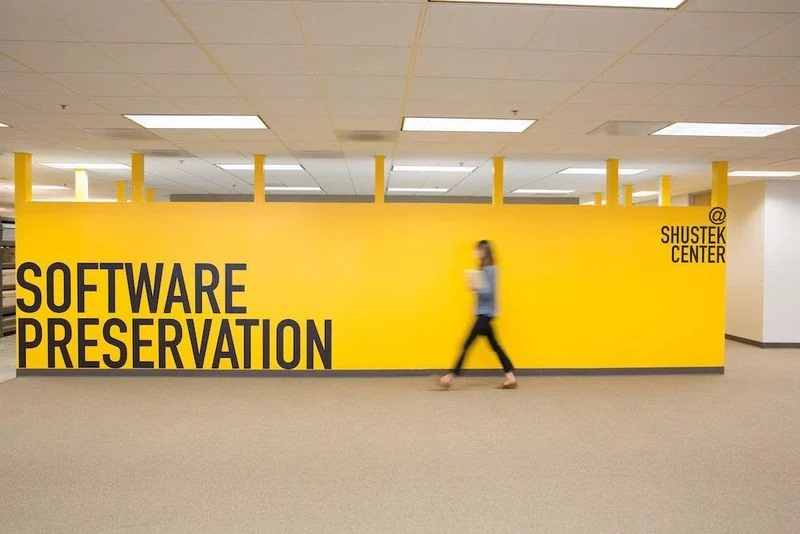
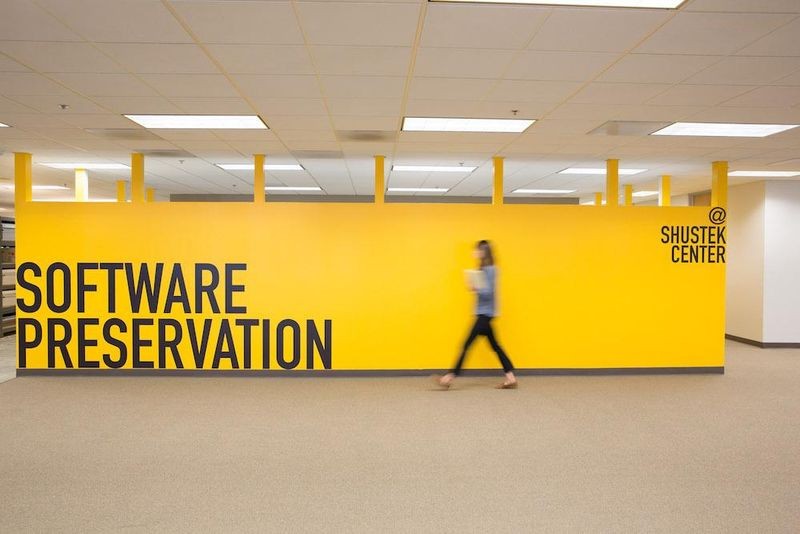
The Computer History Museum's own published pages describe two separate curatorial jobs connected to shareware: cataloguing donated shareware-era materials, and writing analytical history that places shareware developers in a longer distribution timeline. A 2018 CHM blog post states that a National Historical Publications and Records Commission grant would fund processing 'software's transformative history,' with holdings that explicitly 'include business and word processing programs, games, educational and graphics programs, and shareware,' plus 'commercially packaged software boxes' scheduled for scanning. That is archival labour, appraising, describing, and digitising donated material, performed by named museum staff, not a sales or distribution operation.
What the documents show
CHM's 2018 grant announcement, written by museum staff member Sara Lott and crediting Senior Curator Dag Spicer and Center for Software History Director David C. Brock, states plainly that shareware is one of several material types the museum's Software History and Preservation Project processes, without naming a specific shareware title or collection by itself. A separate, earlier 2016 curatorial post by historian Hansen Hsu connects 'shareware Mac developers' directly to the rise of 'indie' software sellers who began, in Hsu's words, 'taking advantage of eCommerce over the Web,' a lineage the post traces forward to Apple's 2008 App Store. Both are the museum's own analytical and archival statements; neither supplies a shareware sales figure, registration fee, or user count for any specific title.
The operating cost
Neither CHM post states what it costs the museum to acquire, process, or store a shareware-era collection, nor what a shareware registration fee once cost a purchaser. The 2018 post names inputs to the archival work, meeting minutes, correspondence, notebooks, marketing material, and 'commercially packaged software boxes', without a dollar figure attached to processing them; the museum's own operating budget for this kind of preservation work is not published in either source and would need a separate annual report to establish.
The stop condition
CHM's own pages do not name a point at which shareware-era material stops being collectible or its own analytical framing stops applying; a museum archive, unlike a commercial product, is not described in either source as having a wind-down condition. The nearest thing to a boundary is procedural: the 2018 post states the grant's own completion point, when '12 finding aids will be posted to CHM's online catalog,' which closes that specific processing project without closing the museum's shareware holdings generally.
- Does connecting shareware developers to today's 'indie' sellers, as the 2016 post does, establish a causal link or only a narrative one?
- What would a specific shareware title's registration price and volume look like inside CHM's own catalog, rather than in its prose posts?
- Is a museum's archival timeline a useful stand-in for a commercial operating history at all?
CHM's public writing treats shareware as a documented category worth preserving and narrating, not as a business to audit. That is a different kind of record than a vendor's own sales page, and it should be read as one.
Sources & reading trail
Museum's own account of a grant to process software-history collections that explicitly include shareware materials.
Source published: 18 October 2018 · Retrieved: 16 September 2026
Museum curator's own analysis connecting shareware-era Mac developers to later indie and App Store software sellers.
Source published: 15 March 2016 · Retrieved: 16 September 2026
Vendor documentation, regulator records and founder-published documents establish the entry; the workload reading and the stop condition are Solo Product Office editorial analysis. This retrospective draft does not imply the site published on the event date.