The workload
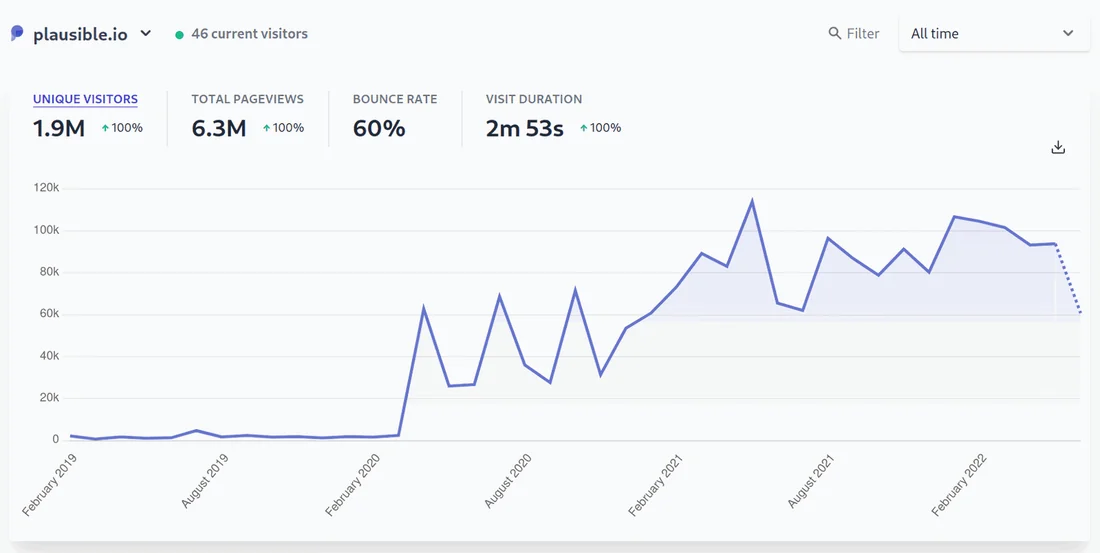
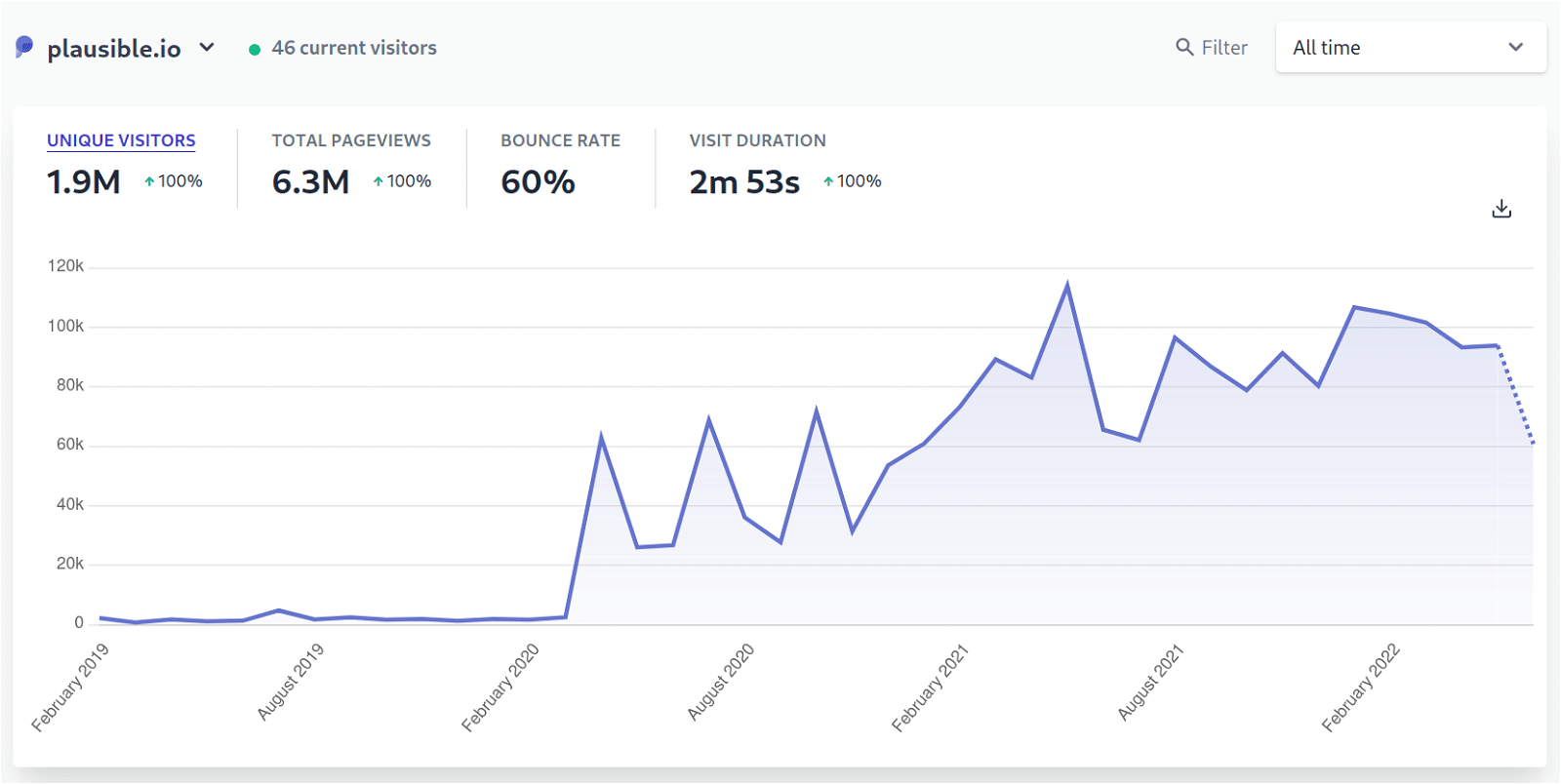
Plausible Analytics documents its own hiring as a sequence of specific, dated additions rather than a planned org chart. Its 22 June 2022 blog post, self-reported and written by co-founder Marko Saric, gives a month-by-month account: the product started as one person's side project in December 2018, Saric joined as a second team member in March 2020, a third member, Robert, joined in June 2021 to help with technical customer support, and a fourth, Cenk, joined in February 2022 specifically to help scale infrastructure under increased demand. Each hire is tied in the post to a named task, support volume or infrastructure load, not to a headcount target.
What the documents show
Self-reported: the June 2022 post states Plausible reached $1 million in annual recurring revenue on 2 June 2022, at $83,637 in monthly recurring revenue, and separately states it gave away 5% of gross revenue to environmental and open-source causes starting February 2021, one of the few places a Plausible post labels a figure gross. Self-reported, nearly four years later: a 15 January 2026 post states the company is sustainably profitable and solely funded by our subscribers and has never raised a single dollar from any investor, without restating a current revenue number. Together the posts show a company that published specific historical MRR figures in 2022 but describes only general profitability in 2026; this entry does not fill that gap with the older number.
The operating cost
Self-reported: the 2022 post's own milestone timeline shows monthly recurring revenue climbing from $400 in the ninth month of paid operation to $83,637 at the four-year mark, a growth path stated by the company itself with no independent audit cited. The 2026 post adds, self-reported, that the simple math is that if a company makes a few million in annual profit and has low costs, the team behind it is financially secure, a general statement about the category of business Plausible says it is, not a stated current figure for Plausible itself. Neither post gives a current employee count in 2026; the last team-size figure in the cited documents is four, from February 2022.
The stop condition
The 2026 post states a self-reported operating rule rather than a numeric stop condition: the company grows only as fast as revenue allows and has chosen to stay small to avoid coordination and management overhead it says comes with headcount growth. That is a stated policy, not an audited limit, and no cited document sets a customer count or revenue figure at which hiring would resume.
- Does a sustainably profitable claim specify a margin, or only that costs are covered?
- What has changed in team size or revenue in the years between a company's dated milestone posts and today?
- Does a stated no-investors policy change the workload calculation for a support or infrastructure hire?
Plausible's own posts, four years apart, describe a real hiring sequence and a stated refusal of outside capital. They do not, on their own, establish what the company earns or employs today.
Sources & reading trail
Founder's self-reported month-by-month team-size and MRR/ARR timeline culminating in $1M ARR on 2 June 2022.
Source published: 22 June 2022 · Retrieved: 16 September 2026
Company's self-reported statement of sustained profitability and refusal of outside investment, undated as to a specific revenue figure.
Source published: 15 January 2026 · Retrieved: 16 September 2026
Vendor documentation, regulator records and founder-published documents establish the entry; the workload reading and the stop condition are Solo Product Office editorial analysis. This retrospective draft does not imply the site published on the event date.