The workload
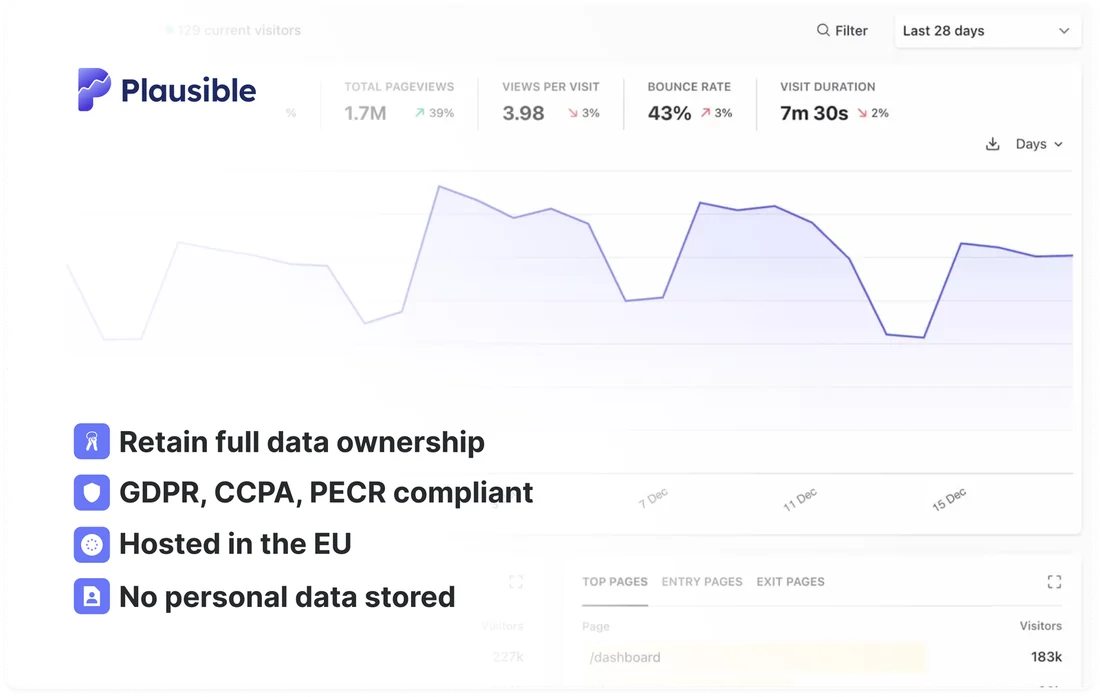
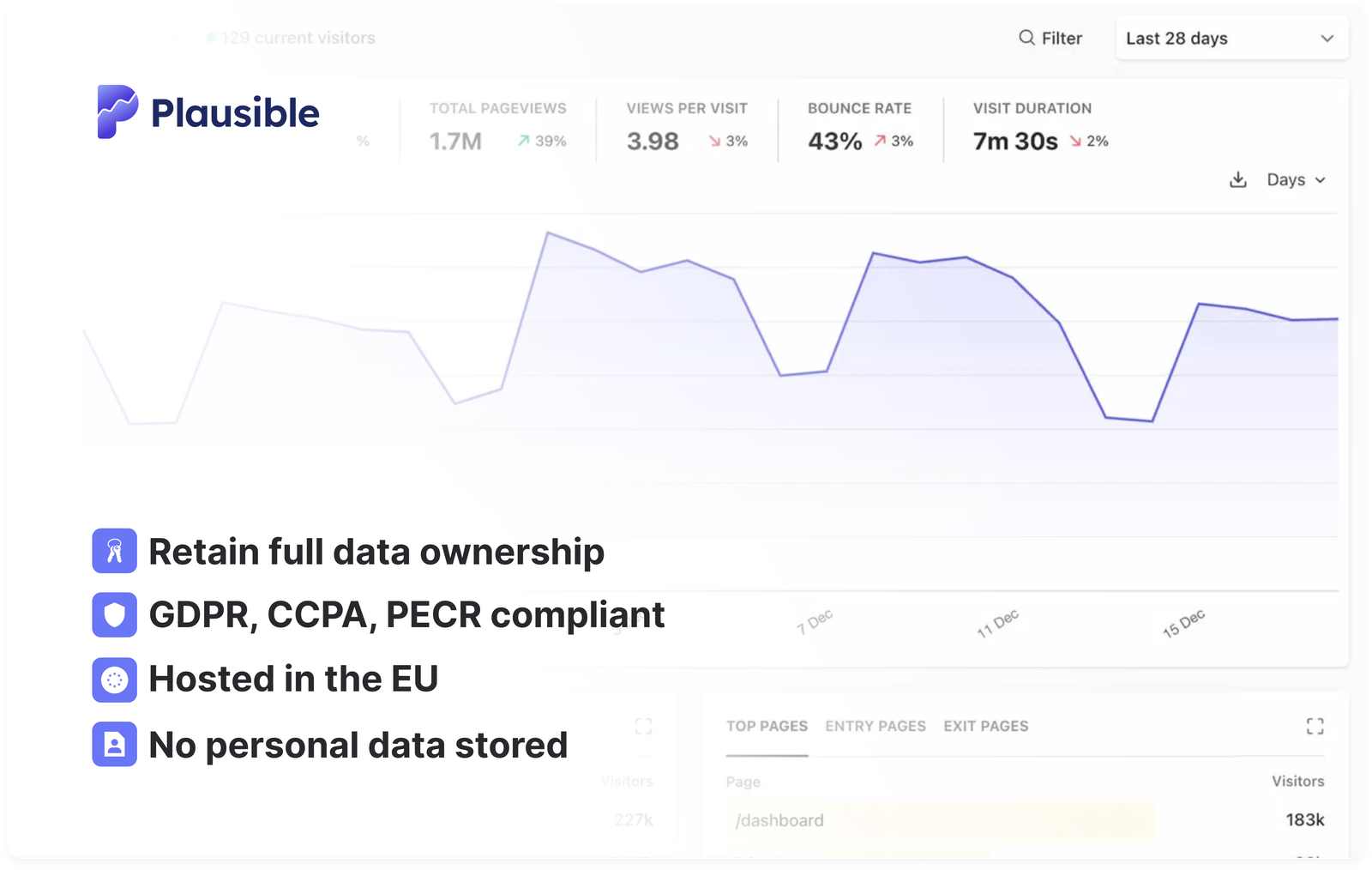
Plausible's own data policy states the mechanism behind its no-cookie claim: the service does not set cookies, generate persistent identifiers or store raw IP addresses, instead deriving a rotating daily hash from incoming request data that is discarded after 24 hours. Self-reported: the vendor's own privacy page asserts that this design 'makes us compliant with cookie laws and privacy regulations including GDPR, CCPA and PECR' and that, because no cookie is set, 'no consent banner is required.' A founder adopting the tool on this basis is adopting a vendor's own legal characterization of its product, not a regulator's finding, and the workload that follows is deciding whether to rely on that characterization or seek independent confirmation for a specific site and audience.
What the documents show
Verified: the data policy states plainly, in the vendor's own words, 'By using Plausible, you do not need cookie banners for analytics or to collect consent for tracking' — a direct claim made by the company about its own product, not a citation to a regulator's decision approving that specific product. Self-reported: the privacy page separately states that 'several EU data protection authorities have declared Google Analytics non-compliant with GDPR' and frames switching to Plausible as removing that risk; this is the vendor's characterization of third-party regulatory history used to support its own sales argument, not a citation to a specific decision naming Plausible. Neither page names a court or regulator ruling on Plausible's own compliance.
The operating cost
Adopting the no-cookie approach costs nothing beyond the analytics subscription price itself, since no separate consent-management tool is purchased; the pages state this as a byproduct of the technical design rather than a distinct line item. The cost the documents do not state is legal review time — verifying that a specific site's use of Plausible, alongside any other trackers on the same page, still avoids triggering a consent requirement.
The stop condition
The documents state no stop condition for this claim; it is presented as a permanent feature of the architecture rather than a time-limited assurance. Editorially, the condition worth naming is that a vendor's own compliance claim about its own product is not equivalent to a regulator's ruling, and it stops being sufficient the moment a site combines Plausible with any other cookie-setting tool, since the combined page's consent obligations would then depend on the other tool, not on Plausible's design alone.
- Does the site pair Plausible with any other script or pixel that does set cookies or persistent identifiers?
- Has the specific claim — 'no consent banner is required' — been checked against current guidance for the site's own jurisdiction?
- Is the EU-regulator language about Google Analytics being cited accurately, or extended into a claim about Plausible it does not make?
The vendor states its own design choice and its own legal conclusion together on the same page; this entry treats the design as verified and the legal conclusion as the vendor's own claim, because that is what the two source documents actually are.
Sources & reading trail
States the technical no-cookie, rotating-hash design and the vendor's direct claim that no consent banner is required as a result.
Source published: Not established · Retrieved: 16 September 2026
States the vendor's self-reported compliance framing, including its characterization of EU regulator findings against Google Analytics used to support its own sales argument.
Source published: Not established · Retrieved: 16 September 2026
Vendor documentation, regulator records and founder-published documents establish the entry; the workload reading and the stop condition are Solo Product Office editorial analysis. This retrospective draft does not imply the site published on the event date.